Booking choice: The San Callisto entry with its guided visit, with free cancellation up to 24 hours before. Book this Compare the options below
The Pontifical Commission for Sacred Archaeology, the Vatican body that looks after Italy's Christian catacombs, lists seven in Rome as open to the public. Three of them sit on or beside the Via Appia Antica; the others are spread around the city's northern and eastern roads.
The entry ticket at the main sites already includes a guided visit, since visits there are guided only. What a tour adds is the ride out of the centre, a catacomb chosen to match the day, and extras such as a walk on the Appian Way. Below, each catacomb in turn, then how to pick.
The quick answer
The most famous is San Callisto, with the Crypt of the Popes and the Crypt of St Cecilia, on the Via Appia Antica and closed on Wednesdays. Domitilla has the only semi-underground basilica in Rome and closes on Tuesdays. San Sebastiano gave the word “catacomb” its name and closes on Mondays. Priscilla, on the Via Salaria, holds the Greek Chapel and what the Vatican's commission calls the oldest image of the Mother of God in the West, and also closes on Mondays. For a first visit, choose San Callisto; on a Wednesday, go to San Sebastiano or Domitilla instead.
What are the different catacombs in Rome?
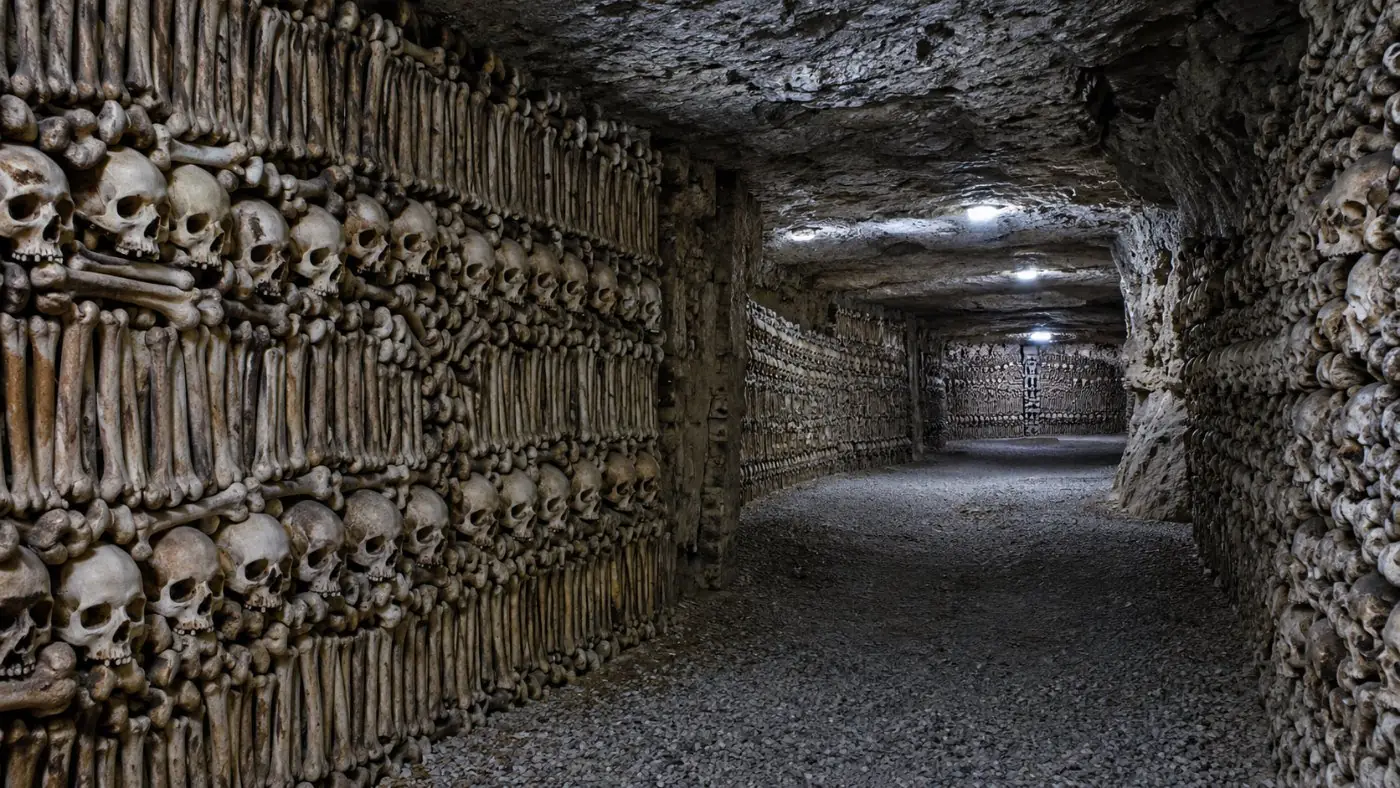
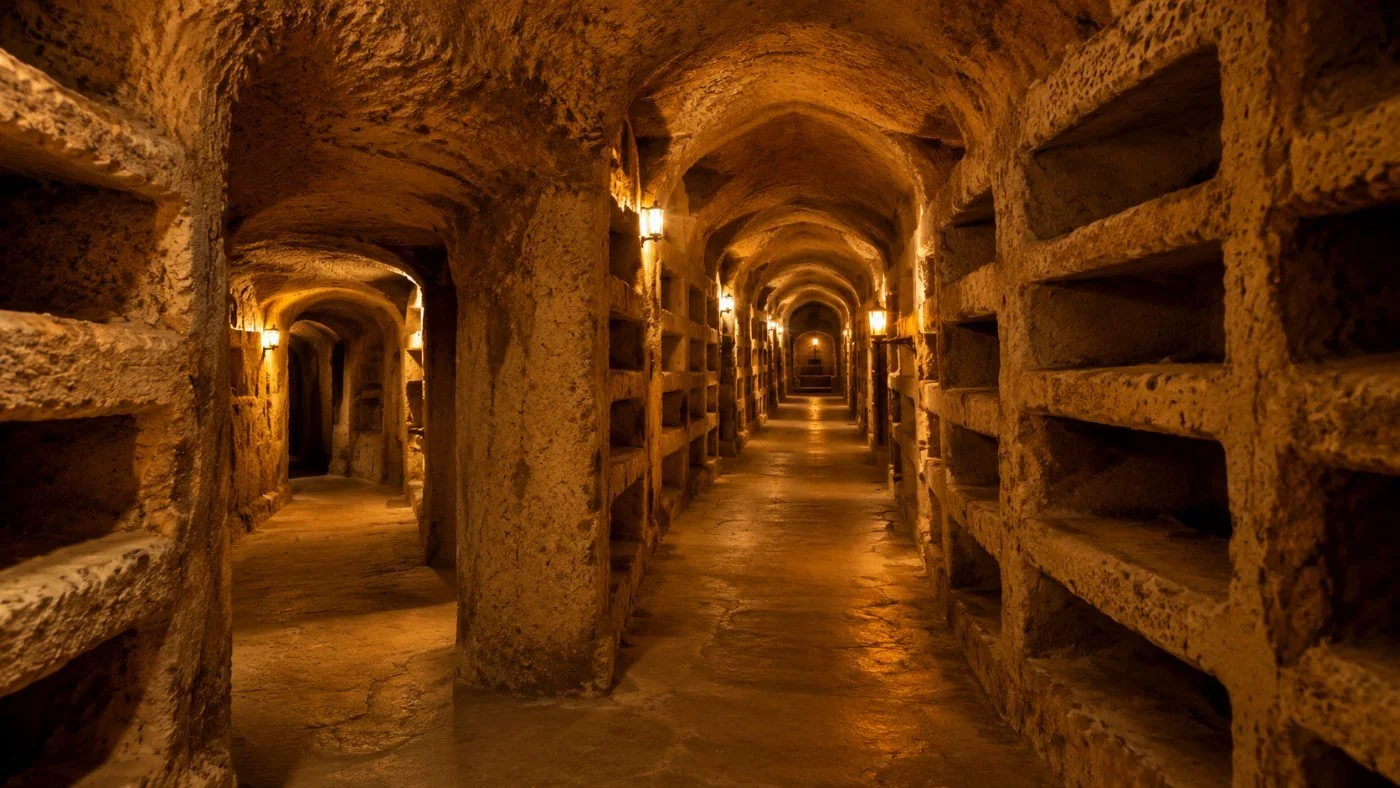
Rome has about 60, dug into soft volcanic tufa outside the ancient walls. Seven are regularly open to visitors, and the table shows where each one is and when it is closed.
The rest are closed or open on request. The Commission takes written requests for sites such as Pretestato and Commodilla, for groups of up to 15 with a custodian and an archaeologist. The Jewish catacombs of Villa Torlonia are not open, and Vigna Randanini on the Appia is visited by arrangement with the Appia Antica archaeological park. For the history behind the galleries, read who is buried in the catacombs.
| Catacomb | Where | Closed | Known for |
|---|---|---|---|
| San Callisto | Via Appia Antica 110 | Wednesday | Crypt of the Popes, Crypt of St Cecilia |
| San Sebastiano | Via Appia Antica 136 | Monday | The origin of the word “catacomb”, graffiti to Peter and Paul, 2nd-century mausoleums |
| Domitilla | Via delle Sette Chiese 282 | Tuesday | Semi-underground basilica of Sts Nereus and Achilleus |
| Priscilla | Via Salaria 430 | Monday | Greek Chapel, one of the earliest known images of the Virgin and Child |
| Sant'Agnese | Via Nomentana 349 | Check before you go | Tomb of St Agnes, Mausoleum of Santa Costanza |
| Santi Marcellino e Pietro | Via Casilina 641 | Thursday | Martyrs Marcellinus and Peter, Mausoleum of St Helena |
| San Pancrazio | Piazza San Pancrazio | Open a few weekday mornings; closed in August | The area under the basilica, reached through a hatch |
The official San Callisto ticket with the site's guided visit: the Crypt of the Popes and St Cecilia.
Book thisWhich is the most famous catacomb of Rome?
San Callisto. Its Crypt of the Popes, the “little Vatican”, held nine popes, and the catacomb became the official cemetery of the Church of Rome in the 3rd century.
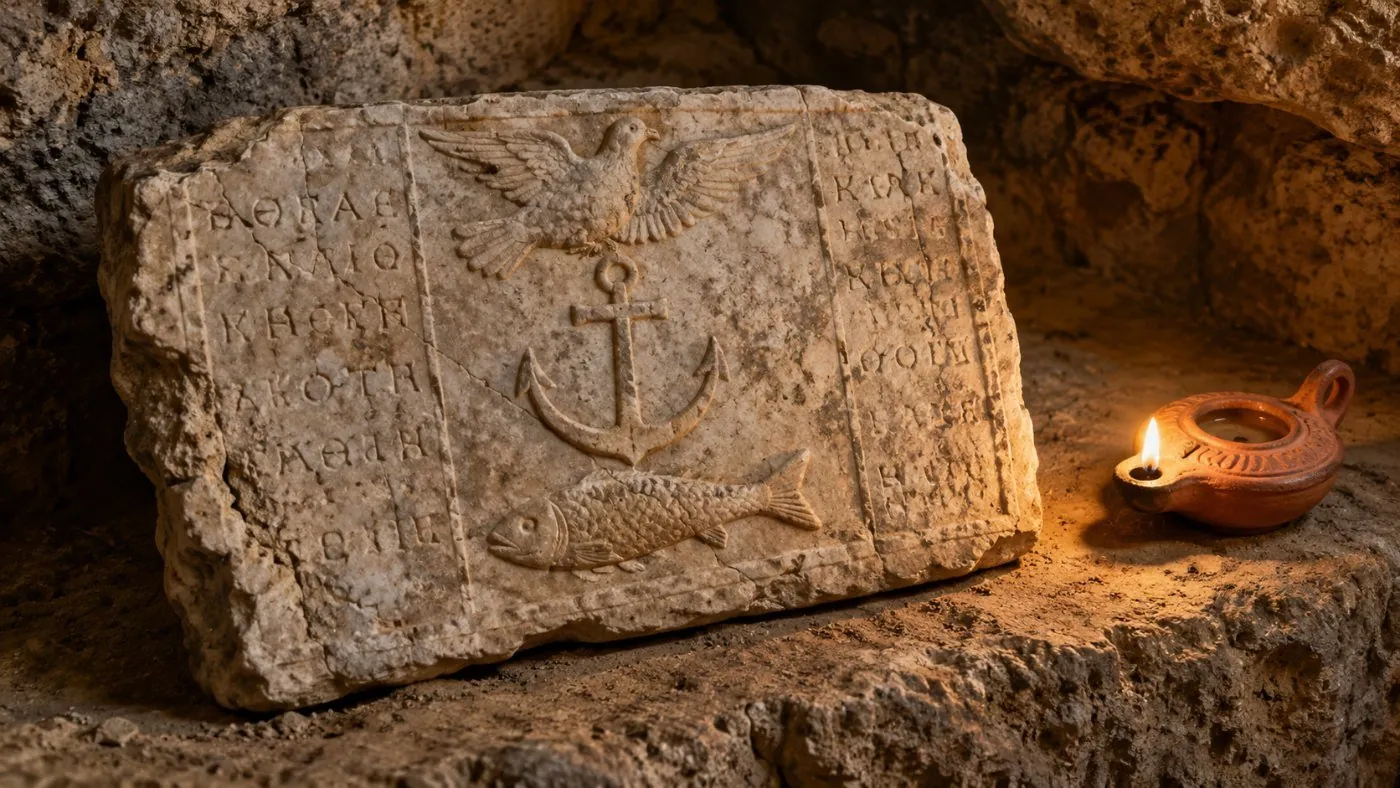
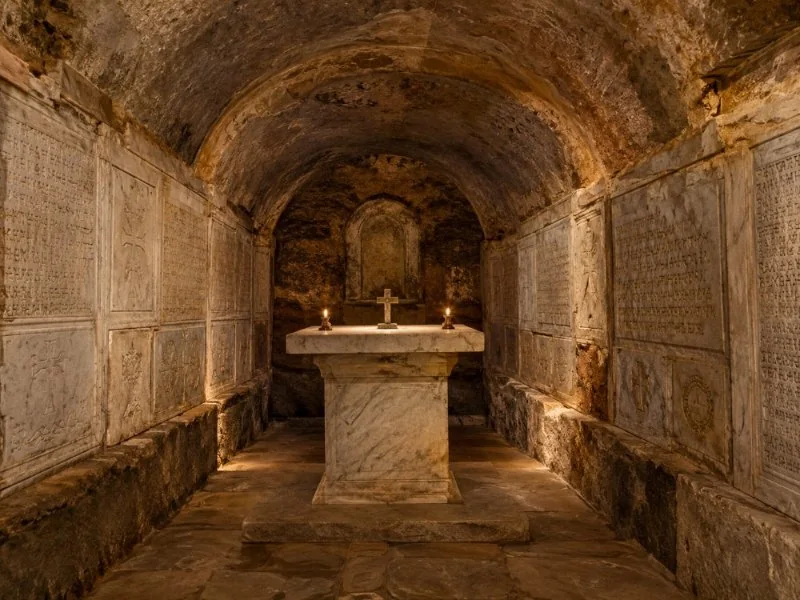
Original Greek inscriptions in the crypt name the popes Pontianus, Antherus, Fabian, Lucius and Eutychian, and two tombstones carry the abbreviation MPT, for martyr. Next door is the Crypt of St Cecilia. Her relics were moved to her basilica in Trastevere in 821; the statue you see is a copy of Stefano Maderno's 1599 sculpture.
The Salesians of Don Bosco have run the site since 1930. Online reservations are required, and the official site names Opera Romana Pellegrinaggi as the one authorised online seller. The catacomb is closed on Wednesdays and, per its official site, from 13 January to 10 February 2027.
Which catacomb is best to visit in Rome?
For a first visit, San Callisto. For painting, Priscilla. For the scale of an underground church, Domitilla. Then let the day of the week decide.
The closing days do most of the choosing:
- Monday: San Callisto or Domitilla. San Sebastiano and Priscilla are shut.
- Tuesday: San Callisto, San Sebastiano or Priscilla. Domitilla is shut.
- Wednesday: San Sebastiano, Domitilla or Priscilla. San Callisto is shut.
- Thursday to Saturday: the four big ones are open; Marcellino e Pietro closes on Thursdays.
- Sunday: the three Appia catacombs are open, and Priscilla opens at 11:30 per its official site.
On any day, at least two of the three Appian Way catacombs are open. Check the annual closures too, which fall in December, January and February. The rest of the practical side is in the visiting tips guide.
What is the largest catacomb?
It depends on whose figures you use. San Callisto and Domitilla are the two largest open to visitors, and each makes its own claim.
San Callisto's homepage gives nearly 20 km of galleries on several levels, more than 20 metres deep, and around half a million burials. Domitilla's site gives 17 km on four levels and 150,000 burials, and calls itself among the largest in Rome. San Sebastiano has about 12 km on three levels, and Priscilla more than 13 km on two. No neutral body publishes a ranking, so treat “largest” as a site's own description.
Taken together, Rome's catacombs run to about 150 km. The burial counts behind those figures are covered in the guide to who is buried there.
What is Domitilla known for?
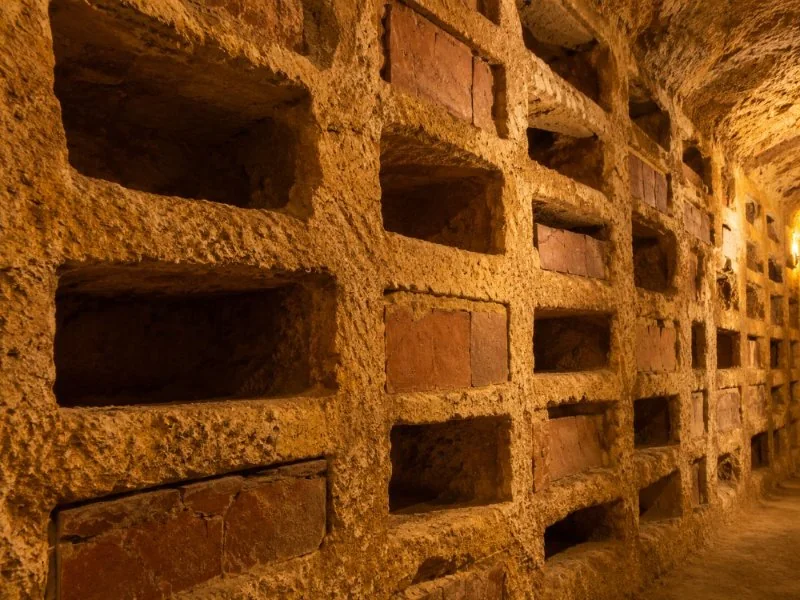
Its basilica. Domitilla has the only semi-underground basilica in Rome, built in the late 4th century over the tomb of the martyrs Nereus and Achilleus.
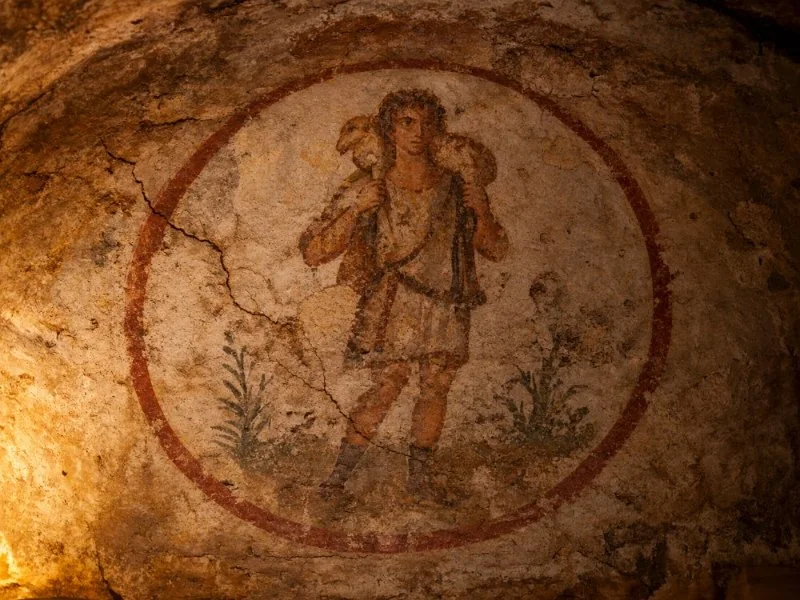
The basilica stands near the tomb of St Petronilla. Beyond it the galleries reach the Flavian hypogeum of the late 2nd century, the Cubiculum of Veneranda, the Arcosolium of the Little Apostles and the chamber of a gravedigger named Diogenes. Turismo Roma also points to a 3rd-century Good Shepherd and an Epiphany with the Magi.
The Divine Word Missionaries run the site, and bookings go through a request form, followed by an email and a confirmation call. It is closed on Tuesdays and sits about ten minutes on foot from Piazza dei Navigatori.
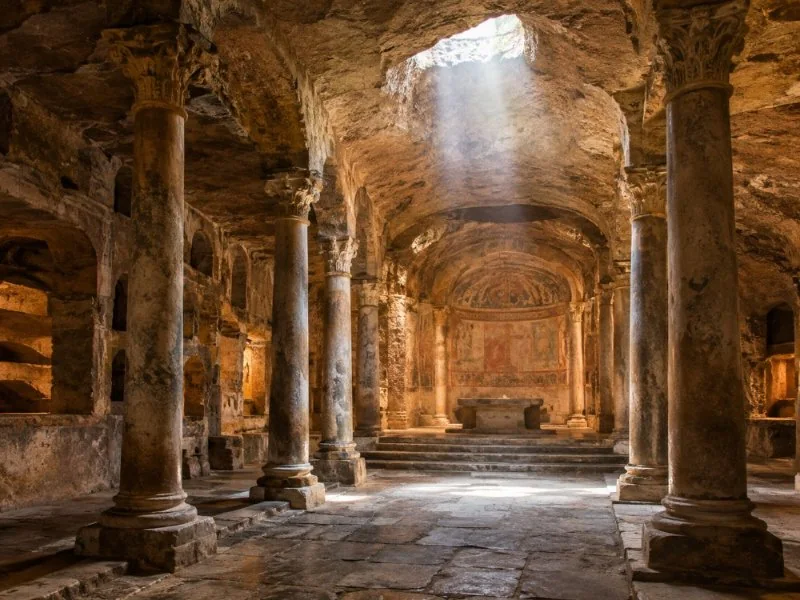
Two hours in English with a skip-the-line Domitilla ticket, meeting in the catacomb's own garden.
Book thisWhy visit San Sebastiano?
Because the word started here. “Ad catacumbas” was the ancient name of this stretch of the Via Appia, and it later came to mean every Christian underground cemetery.
The site was devoted to Peter and Paul, as the pilgrims' graffiti invoking them show. It also holds three Roman mausoleums from the 2nd century AD with original frescoes and stucco, the tomb of St Sebastian in a 17th-century crypt, and a cubicle of Jonah with 4th-century paintings. Up in the basilica is Bernini's bust of the Salvator Mundi.
Visits last about 40 to 45 minutes and the galleries run to about 12 km over three levels. It is closed on Mondays, and Turismo Roma lists an annual closure from 7 to 27 December 2026. Bus 118 stops outside the entrance.
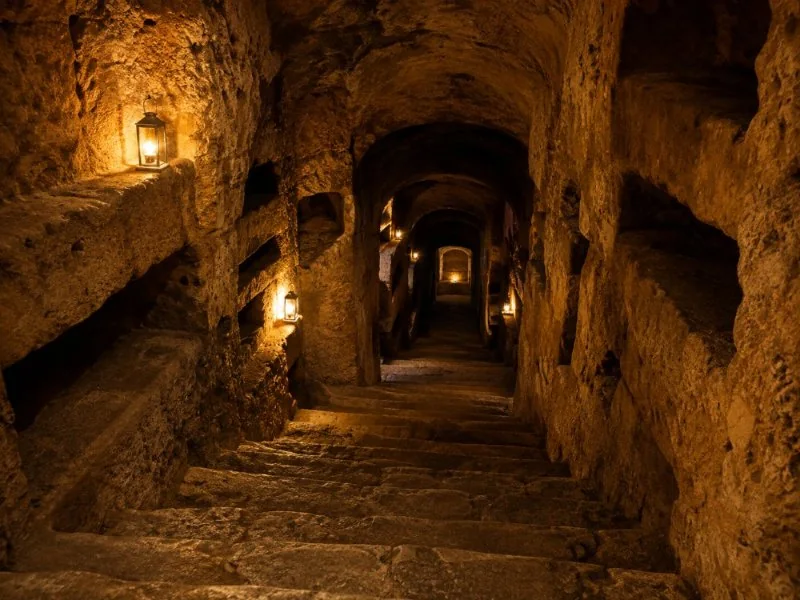
A minibus from Piramide, a walk on the Appian Way and San Sebastiano or Domitilla near closing time.
Book thisIs Priscilla worth the trip north?
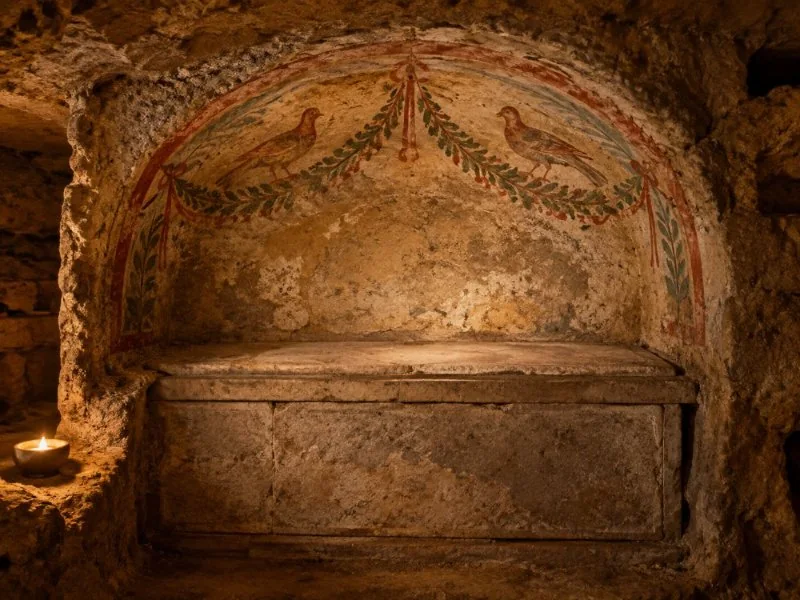
Yes, for early Christian painting. The Greek Chapel and an image of the Virgin and Child, dated by the site to 230-240, are the reasons to cross town to the Via Salaria.
The Vatican's commission calls that image “the oldest image of the Mother of God in the West”. The prophet Balaam stands beside the mother and child. Nearby are the Cubicle of the Veiled Woman, with late 3rd-century scenes of marriage, motherhood and death, and the Hypogeum of the Acilii. Popes buried here include Marcellinus, Silvester and Siricius.
The Benedictine Sisters of Priscilla run the site. Visits last about 45 minutes, and all visitors must book. It is closed on Mondays and for maintenance from 11 January to 1 February 2027. The official Priscilla ticket includes the guided visit; from the centre, take bus 63 or 92 to the Priscilla stop.
What about Sant'Agnese, Marcellino e Pietro and San Pancrazio?
They are quieter and further from the Appia. Check opening times on each site before you go, as these three keep shorter or changing hours.
Sant'Agnese, on the Via Nomentana by the Metro B1 stop of the same name, holds the tomb of St Agnes, martyred at about 12. Next to it stand the round, domed Mausoleum of Santa Costanza with its mosaics and a 7th-century basilica. The catacomb has no painted decoration but many inscriptions. Santi Marcellino e Pietro, on the Via Casilina, needs a booking, closes on Thursdays and includes the Mausoleum of St Helena. San Pancrazio opens only a few hours a week and closes for August. For a full day built around the Appia instead, see the Appian Way half day.
Frequently asked questions
Do I need to book a catacomb visit?
Online booking is required at San Callisto, and Priscilla asks every visitor to book. Domitilla takes bookings by request form, and San Sebastiano recommends booking ahead.
Can I see two catacombs in one day?
Yes. San Callisto and San Sebastiano are on the same stretch of the Via Appia Antica, and Domitilla is a short walk away on Via delle Sette Chiese. A visit takes about 40 to 45 minutes at San Callisto or San Sebastiano.
How much does a catacomb tour cost?
The price is shown at checkout and moves with the date; what changes it is transport, what is bundled and group size.
Can I visit without a guide?
No. Visits are guided only, with the site's own guides, in a group.
Ready to book
Choose your catacombs tour
Free cancellation on every option, per each listing. Booked on GetYourGuide.
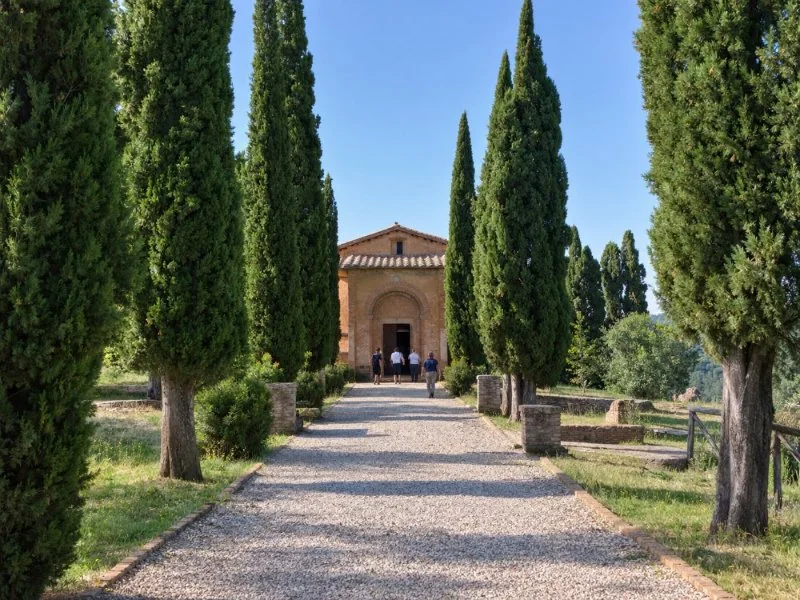
San Callisto Entry & Guided Visit
- Entry to the Catacombs of San Callisto with the guided visit the site runs for every visitor
- The Crypt of the Popes, the crypt of St Cecilia and the cubicles of the sacraments
- Meet at the ticket office at Via Appia Antica 110, ten minutes before your slot
Domitilla Catacombs Small-Group Tour
A native English-speaking guide, a skip-the-line Domitilla ticket and the only half-underground basilica in Rome, with time for the Appian Way after
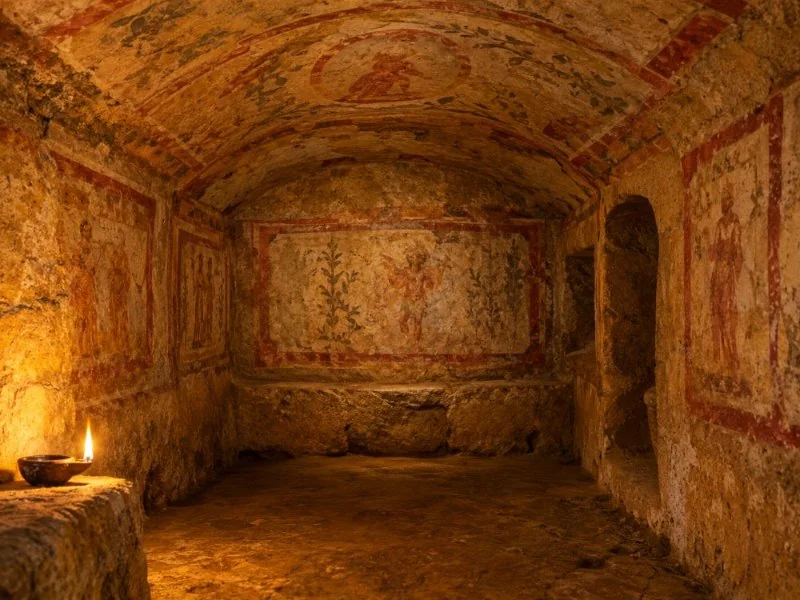
Priscilla Catacombs Entry & Guided Visit
Away from the Appia, on Via Salaria in the north of the city: two levels of galleries looked after by Benedictine sisters, the Greek Chapel, and a painting of the Virgin and Child with a prophet pointing to a star that the Vatican's commission calls the oldest image of the Mother of God in the West.